











Keith Lee

[email protected]

Keith Lee is Professor of AI and Finance at the Gordon School of Business, Swiss Institute of Artificial Intelligence (SIAI). His primary research lies in financial mathematics and AI-driven computational science, with a focus on quantitative modeling of complex economic and financial systems. His work integrates machine learning, stochastic modeling, and data-centric methods to study structural transformations in markets and institutions.

In recent years, his research has extended to the economic and fiscal implications of technological change, including the interaction between artificial intelligence, demographic shifts, and public finance sustainability.

He holds a PhD in Mathematical Finance from Boston University, and previously earned an MSc in Finance and Economics from the London School of Economics. He completed his undergraduate studies in Economics at Seoul National University under the Korea Foundation for Advanced Studies scholarship program.

He regularly contributes analytical essays on the broader socioeconomic implications of AI to The Economy Review.

Keith Lee

AI lowers entry barriers, raises mastery standards Novices gain most; experts move to oversight and design Education must deliver operator training and governance mastery A quiet result from a very loud technology dese

Read More
Keith Lee

AI use is ubiquitous; current assessments reward fluency over thinking Grade process, add brief vivas, and require transparent AI-use disclosure Train teachers, ensure equity, and track outcomes to make AI a partner Eighty-

Read More
Keith Lee

AI accelerates information cascades, turning rumors into rapid bank runs Stability now hinges on dampening synchronized behavior, not just capital buffers Build rumor-aware stress tests, fast disclosures, and drill-based curricula

Read More
Keith Lee

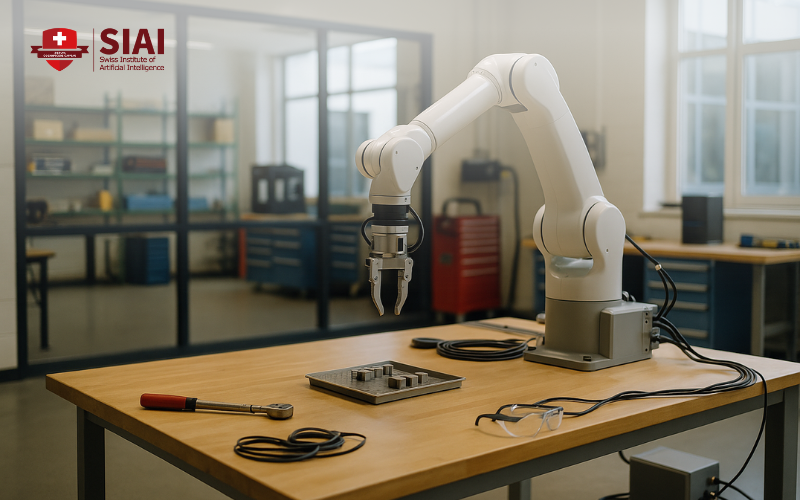
AI and robotics remain narrow tools, excelling only in tightly defined tasks Human versatility—handling exceptions, combining roles, and adapting to context—remains the decisive advantage Education policy must prioritize training for this versatility, turning automation into complement rather than substitute

Read More

Keith Lee

East Asia’s rise is method, not miracle: education plus efficiency China’s electronics exports soared from $5B to ~$1T via process mastery Policy focus: applied numeracy, diffusion finance, infrastructure, measurable yield gains

Read More
Keith Lee

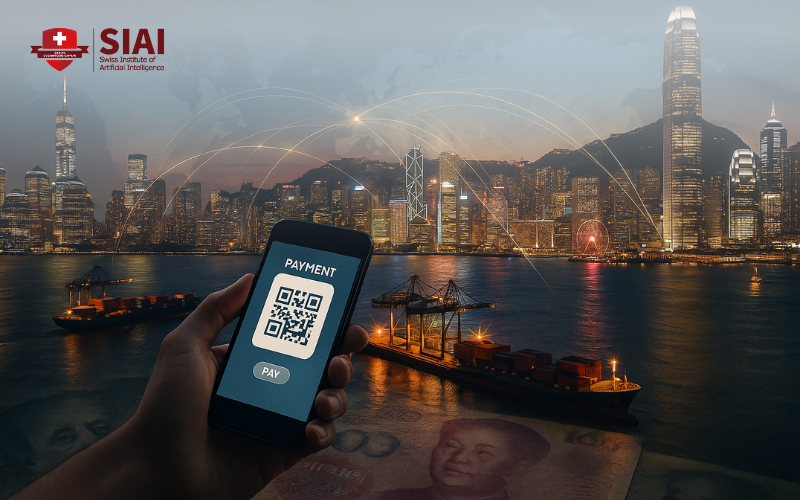
Incentives, not ideology, will decide the dollar–RMB digital race Regulated dollar stablecoins scale; e-CNY stays domestic as China tests HK yuan stablecoins Regulate tightly and pilot cross-border payments in education and trade—measure, don’t mandate

Read More
Keith Lee

Tariffs nudge prices up but can shrink Treasury coupon supply Channel tariff revenue to bills to compress term premia and enable Fed cuts Extending tax cuts swells deficits, hardens long yields, and squeezes education budgets

Read More
Keith Lee

China is softening its BRI approach in Central Asia with grants and joint ventures The key challenge is making infrastructure projects financially self-sustaining Only profitable corridors can secure lasting partnerships and stability

Read More
Keith Lee

This article is based on ideas originally published by VoxEU – Centre for Economic Policy Research (CEPR) and has been independently rewritten and extended by The Economy editorial team. While inspired by the original analysis, the content presented here reflects a broader interpretation and additional commentary. The views expressed do not necessarily represent those of VoxEU or CEPR.

Read More

Keith Lee

This article is based on ideas originally published by VoxEU – Centre for Economic Policy Research (CEPR) and has been independently rewritten and extended by The Economy editorial team. While inspired by the original analysis, the content presented here reflects a broader interpretation and additional commentary. The views expressed do not necessarily represent those of VoxEU or CEPR.

Read More

Keith Lee

This article is based on ideas originally published by VoxEU – Centre for Economic Policy Research (CEPR) and has been independently rewritten and extended by The Economy editorial team. While inspired by the original analysis, the content presented here reflects a broader interpretation and additional commentary. The views expressed do not necessarily represent those of VoxEU or CEPR.

Read More

Keith Lee

This article is based on ideas originally published by VoxEU – Centre for Economic Policy Research (CEPR) and has been independently rewritten and extended by The Economy editorial team. While inspired by the original analysis, the content presented here reflects a broader interpretation and additional commentary. The views expressed do not necessarily represent those of VoxEU or CEPR.

Read More
Keith Lee

This article was independently developed by The Economy editorial team and draws on original analysis published by East Asia Forum. The content has been substantially rewritten, expanded, and reframed for broader context and relevance. All views expressed are solely those of the author and do not represent the official position of East Asia Forum or its contributors.

Read More

Keith Lee

This article was independently developed by The Economy editorial team and draws on original analysis published by East Asia Forum. The content has been substantially rewritten, expanded, and reframed for broader context and relevance. All views expressed are solely those of the author and do not represent the official position of East Asia Forum or its contributors.

Read More
Keith Lee

This article is based on ideas originally published by VoxEU – Centre for Economic Policy Research (CEPR) and has been independently rewritten and extended by The Economy editorial team. While inspired by the original analysis, the content presented here reflects a broader interpretation and additional commentary. The views expressed do not necessarily represent those of VoxEU or CEPR.

Read More

Keith Lee

This article is based on ideas originally published by VoxEU – Centre for Economic Policy Research (CEPR) and has been independently rewritten and extended by The Economy editorial team. While inspired by the original analysis, the content presented here reflects a broader interpretation and additional commentary. The views expressed do not necessarily represent those of VoxEU or CEPR.

Read More
Keith Lee

This article was independently developed by The Economy editorial team and draws on original analysis published by East Asia Forum. The content has been substantially rewritten, expanded, and reframed for broader context and relevance. All views expressed are solely those of the author and do not represent the official position of East Asia Forum or its contributors.

Read More
Keith Lee

This article was independently developed by The Economy editorial team and draws on original analysis published by East Asia Forum. The content has been substantially rewritten, expanded, and reframed for broader context and relevance. All views expressed are solely those of the author and do not represent the official position of East Asia Forum or its contributors.

Read More
Keith Lee

This article was independently developed by The Economy editorial team and draws on original analysis published by East Asia Forum. The content has been substantially rewritten, expanded, and reframed for broader context and relevance. All views expressed are solely those of the author and do not represent the official position of East Asia Forum or its contributors.

Read More